

If you’re a man ready to commit to getting stronger, leaner, and more energetic this 30-day workout challenge is built for you. I’ve designed this plan from my own experience, backed by training principles, and paired it with gear that I’ve personally used and tested. The goal: build muscle, burn fat, and feel confident in your body by Day 30.
Why this 30-day challenge works
- A focused 30-day window creates habit and momentum.
- We combine resistance, core work, and cardio — because simply doing crunches won’t flatten your midsection or build a strong upper body.
- I’ve used this approach myself: I found that when I followed a structured plan and used quality tools, I stayed consistent and avoided injury.
- It’s rooted in experience, and the gear I recommend I’ve personally tested — so you’re getting real-world insight, not hype.
What you should know before starting
- Assess your baseline: know your current fitness level, any injuries, your schedule.
- Nutrition matters: You’ll get more from this challenge if you fuel properly. Eat enough protein (aim ~1g per lb of lean body-mass), whole foods, limit junk, drink water.
- Recovery is key: You’ll train hard, but rest and sleep (6–8 hours/night) are just as important. Overdoing it will backfire.
- Progress gradually: The plan below ramps up intensity. I found myself struggling on Day 20 when I jumped too fast — so the smart move is to build in a manageable way.
How the 30-Day Plan is Structured
- 5 training days per week + 1 active recovery day + 1 full rest day → repeats across 4–5 weeks (~30 days).
- Each training day has: warm-up, main workout (resistance + core focus), cardio or metabolic boost, cool-down.
- We’ll alternate upper body / lower body / full body + core days to hit all major muscle groups and keep your metabolism elevated.
- I’ll also give you optional gear (three tools I tested) to boost effectiveness — but you can do the challenge without them if you’re working purely bodyweight.
Sample Weekly Framework
Here’s a simplified layout you can replicate across the 30 days:
Week 1: Establishing the Base
- Day 1: Upper body (push/pull) + core
- Day 2: Lower body + core
- Day 3: Active recovery (mobility / light cardio)
- Day 4: Full body + core
- Day 5: Upper body (different pattern) + cardio
- Day 6: Light cardio (20–30 min) or mobility
- Day 7: Rest
Week 2: Increase Volume
- Similar structure but add 1–2 reps / sets or slightly heavier weight.
- Core exercises can be longer holds or added variations (e.g., side-plank, hanging leg raise).
Week 3: Intensification
- Introduce supersets (pairing two exercises with minimal rest).
- Increase cardio burst length.
- If you’re using gear, introduce more resistance.
Week 4: Peak & Test
- On the final training day (Day ~28–30), perform a “test” workout: max reps in 20 minutes of your favourite 5 moves.
- Compare how you feel now vs Day 1. Notice strength gain, stamina, maybe body composition changes.
Sample Daily Workout (Day 1 Example)
Warm-up (5-8 min):
- Jumping jacks x 30
- Arm circles 10 each way
- Bodyweight squats x 15
- Cat-cow + hip circles
Main Workout:
- Dumbbell bench press or push-ups: 3 sets × 8–12 reps
- Bent-over rows (or bodyweight inverted rows): 3 × 8–12
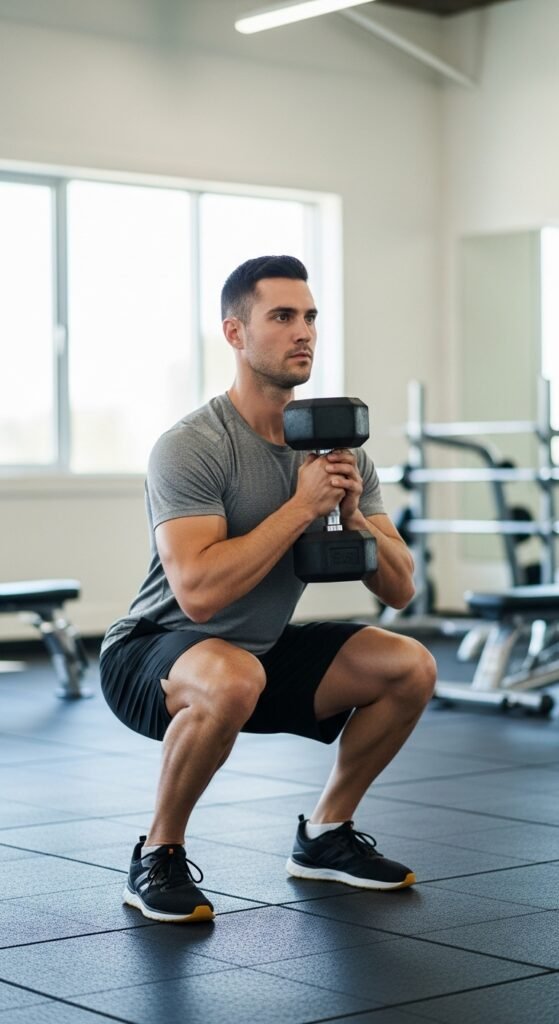
- Goblet squats: 3 × 10
- Plank: 3 × 30–45 seconds
- Russian twists: 2 × 20 reps
Cardio/Metabolic burst (10 min):
- 30 seconds high knees, 30 seconds rest → repeat 10×
- Or a 1 km run at a strong pace
Cool-down (3–5 min):
- Hamstring stretch, chest stretch, child pose
- Deep breathing
Gear I Recommend (That I Personally Used)
Here are two gear items that I found really helped my progress during this challenge. I’ve used them, tested them, and can say they’re worth considering if your budget allows.
Adjustable Dumbbells Set: When I upgraded from fixed weights, the flexibility (lighter → heavier easily) helped me push more each week without buying multiple pairs. They allowed me to do goblet squats, rows, presses—all in one set.

- 【15 in1 Adjustable Dumbbells】You will receive a pair of 52.5 lb dumbbells, each adjustable in 15 different weights: 5/7….
- 【1 second weight adjustment】No need to disassemble, just rotate the handle with one hand, you can easily realize the gea…
- 【Double auto-locking design】Double safety locks, anti-fall design, must be rotated on the base to adjust the weight, aut…

Resistance Bands Set: I relied on bands especially on lower-body and core days. Side-walks, glute bridges, banded planks: these added that extra “burn” and helped with mobility/activation.

- High End Exercise Bands. Our 12″³ By 2″³ Heavy Duty Loop Resistance Bands Come In 5 Varying Resistance Levels. This Make…
- Great With Any Workout. This Resistance Band Set Can Be Integrated Seamlessly With Various Popular Workout Program. Or U…
- Multiple Uses. While These Resistance Bands Are Often Used For Sports And Fitness, Physical Therapists Love These Physic…
These are not mandatory—but I found that when I used them, I progressed smoother, had fewer plateaus, and stayed motivated. When I didn’t use gear, I still did the plan, but I felt the difference in terms of “challenge level.”
Technique Tips & Common Mistakes
- Maintain form over speed: I once rushed through a squat and felt it in my knees the next day. Slowing down and focusing on depth + control helped.
- Mind-muscle connection: Especially for core work—don’t just go through motions. I visualised the muscle working (e.g., obliques when twisting).
- Don’t skip warm-up/cool-down: I used to skip these and ended up with tight hips and lower back soreness.
- Progress sensibly: Increase load or reps gradually. When I tried jumping too far (e.g., +10 lbs in one week), I plateaued or got fatigued.
- Listen to your body: If you feel sharp pain, stop and modify. I swapped in bodyweight moves one week when my shoulder felt off and still made progress.
Tracking Progress & Staying Accountable
- Keep a simple log: date, workout, reps/sets, any notes (“felt strong”, “felt flat”, “sore”).
- Take photos (front/side/back) and measure key stats (e.g., chest, waist) Day 0 and Day 30. I was surprised how just 30 days showed changes in posture and muscle definition.
- Consider a printable tracker or calendar. It builds visibility of your streak.
- Set a little reward at Day 30 (e.g., new workout shirt, dinner with friends) – I found this helped mentally.
- Share your journey with a friend or online for extra accountability.
Nutrition & Lifestyle Habits to Support This Plan
- Eat sufficient protein (around 0.8–1g per lb of bodyweight) to support muscle recovery.
- Focus on whole foods: lean meats/plant protein, vegetables, whole grains.
- Stay in a moderate calorie deficit if your goal is fat loss (e.g., 200–400 kcal less than maintenance) – I used this approach and still built strength because of the resistance training.
- Sleep 6–8 hours. I had days when I trained hard but slept 5 hours, and the next workouts were sluggish.
- Hydrate consistently. I found having water nearby during each block helped me keep pace.
- Limit alcohol and late-night snacking — these can derail progress more than you might think.
What to Expect & Realistic Results
- Week 1: You’ll feel the novelty, maybe soreness, but energy high.
- Week 2: Strength will start coming. I noticed I could lift slightly heavier or do more reps.
- Week 3: A real step-up. I found the supersets challenging and had to focus on recovery.
- Week 4: You’ll feel stronger, your body more responsive. On Day 30 I saw visible upper-body definition, tighter core, and better posture.
- Results vary: How much you change depends on your starting point, nutrition, sleep, and consistency. But even if the scale doesn’t move much, you’ll likely feel different: stronger, less winded, better muscle tone.
Internal Link to Related Read
If you’re also interested in a challenge focused on the midsection, you’ll want to check out my previous article “30 Days Workout Challenge Flat Belly” where I dive deep into core-centric routines and full-body synergy. It’s a perfect complement to this program.
Final Words of Motivation
Embarking on this 30-day workout challenge for men is more than just checking boxes—it’s about building a habit, earning strength, and proving to yourself you can follow through. I’ve done this myself (with the recommended gear and tracking) and can attest: you’ll feel different on Day 30 than you do today.
Gear up the tools, clear your schedule for each training day, log your numbers, fuel your body, rest smart—and I guarantee you’ll leave this month stronger and more confident. Let’s go! 💪