

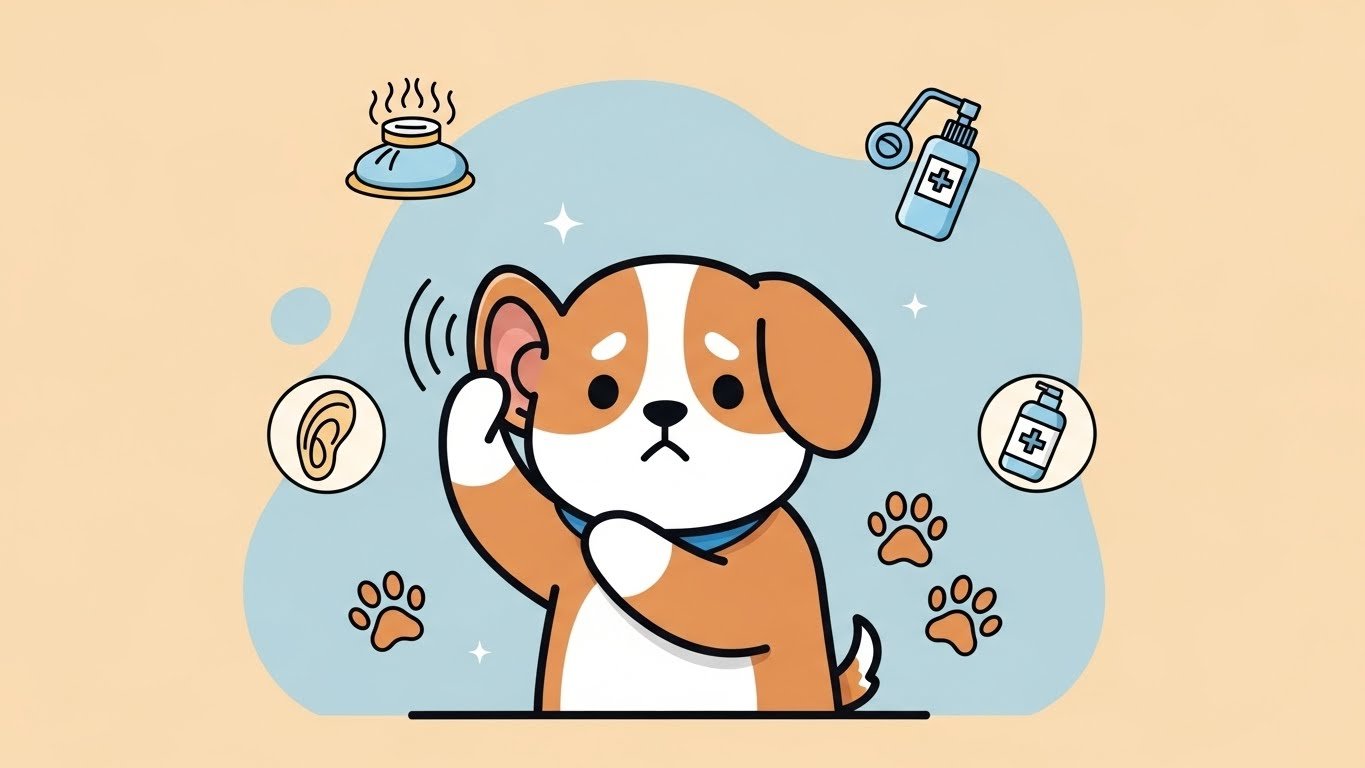
Earaches in dogs can be worrying especially when they suddenly start shaking their head, scratching constantly, or whining during petting. Like humans, dogs can get earaches from infections, allergies, trapped water, mites, or even wax buildup. The good news: many gentle at-home remedies can help soothe discomfort before or after getting guidance from a veterinarian.
This guide shares 7 safe, effective remedies, based on real dog-owner experiences and general veterinary recommendations. It focuses on comfort and support while emphasizing what should never be used in a dog’s ear unless a vet approves.
⭐ 1. Warm Compress Therapy (Instant Soothing Relief)
One of the simplest and safest ways to soothe a dog’s earache is a warm compress.
How to do it:
- Wet a soft cloth with warm (not hot) water.
- Hold it gently against the outer ear for 5–10 minutes.
- Repeat 2–3 times a day.
Warmth helps reduce inflammation and pressure inside the ear canal. Many dog owners notice their dog relaxing almost immediately.
⭐ 2. Vet-Approved Ear Cleaner (For Wax & Mild Debris)
A gentle, vet-approved ear cleaning solution can help if the problem is:
- Wax buildup
- Dirt
- Mild irritation
- Post-swimming moisture
Choose a dog-specific ear cleaner—never hydrogen peroxide or alcohol, which can sting and worsen irritation.
How to use:
- Lift the ear flap
- Squeeze cleaner into the canal
- Gently massage the base of the ear
- Let your dog shake out the liquid
- Wipe only the visible outer ear with a cotton pad
This remedy often brings quick relief if debris is the cause.
⭐ 3. Moisture Removal After Bathing or Swimming
Trapped water often leads to earaches, especially in dogs with floppy ears (like Labradors, Beagles, and Cocker Spaniels).
To help prevent and soothe ear discomfort:
- After bathing or swimming, dry the outer ears gently
- Use a drying ear solution formulated for dogs
- Keep long ear flaps dry and clean
A simple routine after water activities can reduce inflammation and prevent future earaches.
⭐ 4. Coconut Oil Massage Around the Ear (NOT Inside the Ear)
Coconut oil can be soothing when used around the ear, but not inside the canal.
Benefits:
- Moisturizes irritated outer skin
- Reduces scratching
- Helps soothe redness
How to apply safely:
- Warm a small amount of coconut oil
- Gently rub it around the outer ear flap
- Avoid dripping oil into the ear canal
This natural approach is great for dogs with dry, itchy skin near the ears.
⭐ 5. Anti-Allergy Support (When Allergies Trigger Earaches)
Many dogs with seasonal or food allergies develop ear inflammation. If your dog frequently gets earaches during pollen season or after certain foods, allergies may be the cause.
Helpful steps:
- Use a vet-approved antihistamine (only if prescribed)
- Switch to hypoallergenic diets if recommended
- Clean paws after walks to reduce allergen transfer
- Regularly clean ears during allergy season
Managing allergies often reduces the frequency of earaches dramatically.
⭐ 6. Apple Cider Vinegar Around the Ear (Never Inside)
While never safe inside the ear canal, diluted apple cider vinegar can help clean the outer ear area.
How to mix:
- 50% warm water
- 50% apple cider vinegar
How to use:
- Moisten a cotton pad with the mixture
- Wipe the ear flap and outer folds only
- Avoid broken skin (it may sting)
- Never pour vinegar into the ear
This can help reduce yeast buildup around the ear and soothe mild itchiness.
⭐ 7. Gentle Ear Massage to Reduce Ear Pressure
A relaxing ear massage can help relieve pain caused by fluid pressure or stiffness.
Try this:
- Place your thumb at the base of the ear
- Use small circular motions
- Massage for 1–2 minutes
- Stop if your dog pulls away or shows discomfort
Dogs often lean into the massage when it feels good. It increases circulation and reduces tension.
🚫 Remedies You Should NOT Try on Dogs
Some common internet suggestions are unsafe:
❌ Garlic oil (toxic to dogs)
❌ Essential oils (most are unsafe or irritating)
❌ Hydrogen peroxide
❌ Alcohol
❌ Q-tips
❌ Oils or homemade drops inside the ear canal
❌ Human ear drops
These can cause burns, worsen infections, or lead to complications.
⭐ When to See a Veterinarian
Contact a vet if your dog has:
- Yellow, brown, or black discharge
- A strong bad odor
- Swelling or redness inside the ear
- Fever or lethargy
- Crying when the ear is touched
- Head tilt or balance issues
- Symptoms lasting longer than 24–48 hours
Dogs can develop secondary infections quickly, so early treatment is important.
⭐ Final Takeaway
Earaches in dogs can be uncomfortable, but with the right gentle care, many mild cases improve quickly.
The 7 remedies warm compresses, vet-approved ear cleaners, moisture control, coconut oil massage, allergy support, diluted ACV (outer ear only), and gentle massage are safe starting points to help soothe your dog at home.
A caring, attentive routine combined with quick vet follow-up when needed ensures your dog stays happy, healthy, and pain-free.