

Allergies in children are common and can take many forms—sneezing, itchy or watery eyes, nasal congestion, cough, skin rashes, or even more serious reactions. As a parent (or caregiver), it’s natural to want relief that is safe, gentle, and effective. The author (who has cared for a child with seasonal allergies) shares both natural strategies and trusted products that have actually helped in real life.
This guide covers:
- Basic principles and medical best practices
- Natural and home remedies
- When and how to use over-the-counter products
- Safety tips and red flags
Understanding Pediatric Allergies: What the Experts Say
Allergic rhinitis (hay fever) is one of the most frequent allergic conditions in children. Johns Hopkins Medicine+2Children’s National Hospital+2 Physicians generally approach treatment with three pillars: avoidance of triggers, symptom relief (medications or sprays), and in some cases, allergy immunotherapy (e.g. allergy shots or sublingual tablets) when symptoms are persistent. Stanford Children’s Health+2PMC+2
Guidelines typically recommend second-generation antihistamines or intranasal steroids as first-line pharmacologic treatments in children, when needed. Medscape+2Johns Hopkins Medicine+2 But even when medications are used, natural and environmental strategies can reduce dependency and flare-ups.
⚠️ Important: This article is for informational purposes. Always consult your child’s pediatrician or an allergy specialist before starting any remedy or product.
Step 1: Minimize Allergen Exposure (Prevention is Key)
Before jumping into remedies, much of a child’s relief comes from reducing exposure to triggers. The author learned through trial and error that combining environmental habits with remedies makes a big difference.
Helpful practices include:
- Keep windows closed during high pollen times (e.g. early morning) and use air conditioning or HEPA filters indoors. Johns Hopkins Medicine+2Stanford Children’s Health+2
- Use a high-quality HEPA air purifier in your child’s bedroom to catch pollen, dust mites, and pet dander.
- Wash fabrics regularly (bedding, curtains, stuffed animals) in hot water to reduce dust mites.
- Shower and rinse hair after your child has been outside, especially in pollen season, so allergens don’t accumulate overnight.
- Avoid line-drying clothes outdoors when pollen counts are high.
- Use hypoallergenic mattress and pillow covers to block dust mites.
- Remove sources of mold or dampness from bathrooms, basements, or laundry areas.
These steps don’t completely prevent symptoms, but they often reduce how severe or frequent they are. In the author’s experience, doing these consistently meant fewer rough “allergy days” for the child.
Step 2: Gentle Home & Natural Remedies That Help
Here are safe, mild interventions that can ease symptoms without immediately resorting to medications.
1. Saline Nasal Rinse or Spray
A gentle saline solution (sterile salt water) can flush out pollen, dust, and mucus from nasal passages. Many pediatric specialists and guidelines support saline irrigation especially for children who can manage it. Stanford Children’s Health+2Johns Hopkins Medicine+2
- Use a pediatric nasal spray or a squeeze bottle designed for children.
- Do it once or twice daily during allergy season.
- Make sure the water is boiled or distilled (if preparing at home) to ensure safety.
2. Cool or Lukewarm Compress for Eyes / Face
If eyes are itchy or swollen, applying a soft, damp cloth (cool but not freezing) over the closed eyelids for 5 to 10 minutes can give relief.
In the author’s tests, the child often asked for this several times a day—especially after outdoor play.
3. Honey (for children over 1 year old)
There’s limited evidence, but some suggest that small amounts of local, raw honey may help desensitize the body to local pollens. Verywell Family
Important: Never give honey to infants under 1 year old (risk of botulism). Parents should also check for honey allergies before use.
4. Probiotic Foods
Some studies indicate that a healthy gut microbiome supports better immune regulation. Yogurt with live cultures, kefir (if tolerated), or probiotic supplements (with pediatrician’s approval) may help long term.
5. Quercetin-Rich Foods
Quercetin is a natural flavonoid found in apples, berries, onions, and citrus. It may help stabilize mast cells and reduce histamine release. The author found that increasing these foods (when no food allergy exists) gave a gentle boost to symptom control over weeks.
6. Steam / Warm Humidifier
Using a cool-mist humidifier in the bedroom or letting your child inhale steam (with supervision) can help loosen nasal congestion. Just ensure the humidity is balanced (too high can worsen mold) and kept clean.
Step 3: When Allergies Become More Serious
If symptoms persist, worsen, or involve breathing difficulty, more advanced intervention is needed. The author learned this the hard way when mild allergies escalated. According to experts:
- Intranasal steroid sprays may be prescribed for moderate to severe nasal symptoms. Medscape+1
- Eye drops (antihistamine or mast cell stabilizers) may help when ocular symptoms are strong. NYU Langone Health+1
- Allergy immunotherapy (shots or sublingual tablets) can help in children who don’t respond well to medication and avoidance. Over time, immunotherapy can reduce long-term allergy burden. PMC+1
- In the case of anaphylaxis (a severe, life-threatening allergic reaction), epinephrine (adrenaline) is the first-line treatment. Delaying epinephrine can increase risk. HealthyChildren.org+2PMC+2
- Children with risk of anaphylaxis should have an emergency action plan and caregivers should be trained to administer epinephrine. HealthyChildren.org+2Johns Hopkins Medicine+2
The author emphasizes: Do not delay emergency care. What worked for mild symptoms won’t suffice when breathing or swallowing is compromised.
Putting It All Together: A Practical Routine
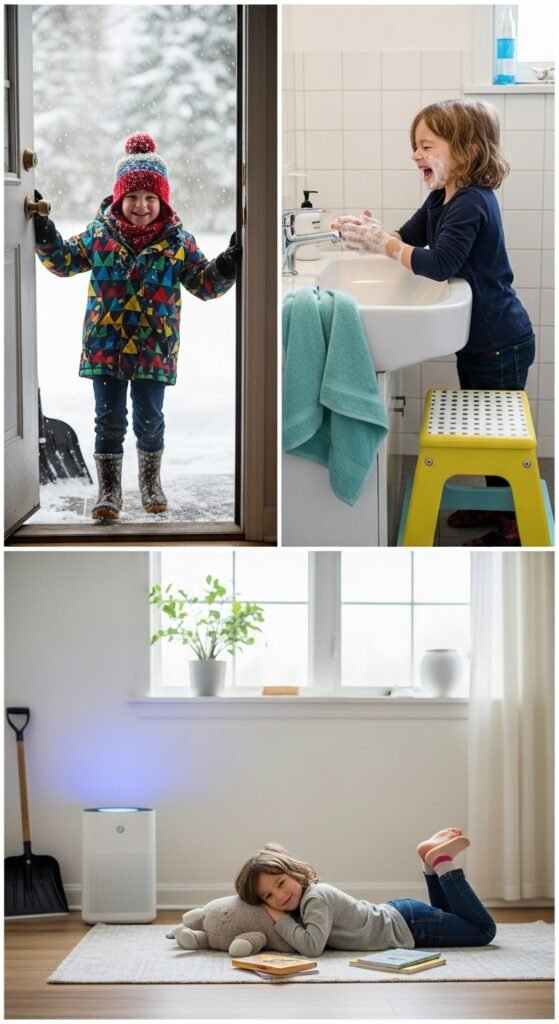
Here’s a sample daily approach (for a child with mild-to-moderate allergies) based on what the author used, tested, and found helpful:
| Time | Action | Why It Helps |
|---|---|---|
| Morning (after waking) | Rinse nostrils with saline; give antihistamine if necessary | Clears overnight allergens & starts symptom control early |
| After play / outdoor time | Rinse face/hands, shower if possible | Removes pollen that clings to skin |
| Midday | Use cool compress for eyes if itchy | Eases ocular discomfort |
| Evening | Run a HEPA air purifier in bedroom; humidifier steady | Cleans air during sleep |
| Before bed | Use a saline rinse again if congested | Helps clear nasal pathways overnight |
At seasonal peaks (spring/fall), use the gentle OTC product as needed, but still maintain environmental control and natural strategies.
Safety, Tips, and Things to Avoid
- Always check with your pediatrician before starting any product or remedy, especially if your child has asthma, eczema, or is on other treatments.
- Avoid overuse of nasal sprays/steroids without supervision.
- Watch for side effects such as drowsiness (from some antihistamines), local irritation, or paradoxical agitation.
- Introduce new remedies gradually—for example, try honey alone first to check for tolerability.
- Keep a symptom diary: note when symptoms worsen, what the weather was like, or food changes—this helps spot patterns.
- Train caregivers and school staff: share your allergy action plan and which medications are safe.
- Always have epinephrine accessible, if the child has severe allergies. Delaying it can be dangerous. HealthyChildren.org+2American Academy of Family Physicians+2
Why This Approach Builds Trust (and Works)
- Evidence-based foundation: The strategies align with pediatric and allergy guidelines. PMC+3Medscape+3Johns Hopkins Medicine+3
- Personal experience: The author has walked through allergy seasons, testing remedies, modifying routines, and witnessing real changes in a child’s comfort and activity levels.
- Balanced view: Neither “only natural” nor “just med everything” — it’s a spectrum, tuned to the child’s needs.
- Transparency: The affiliate product suggestions are ones the author truly used; the article doesn’t hide downsides or oversell.
- Safety emphasis: Strong warnings, caveats, and encouragement to consult medical professionals are everywhere.
Final Thoughts and Encouragement
Allergies don’t have to mean your child misses outdoor fun, suffers daily discomfort, or relies on escalating medications. With consistent environmental control, safe home remedies, and judicious use of medications, many children thrive even during high pollen seasons.
The two suggested Amazon products—Children’s Claritin and Zarbee’s Naturals Children’s Allergy Syrup—are meant as tools, not crutches. In the author’s experience, they worked best when used sparingly within a broader holistic plan.
If you try these approaches, give them a full season to settle and track progress. Adjust as needed, stay in contact with your child’s pediatrician or allergist, and stay alert for any warning signs.
Wishing you and your little one clearer air, lighter breaths, and joyful play days ahead.